Showing posts with label shortage. Show all posts

Friday, 5 April 2013

UK long-range gas storage drained

Yesterday (4 April 2013) afternoon, the UK long-range gas storage facility at Rough went 'below empty' for the first time. This is possible because Centrica normally leaves some 'cushion gas' in the depleted Rough reservoir to make sure there’s enough pressure to keep it flowing properly. Here's the status, taken from the Prevailing View page, showing figures valid for 6am on the 3 and 4 April 2013:

UK gas storage 4 April 2013

The 4pm udpate today gives the Long Range stock level as -132 GWh, a negative stock level! I got this from the spreadhseet on this page, as the Prevailing View is being a bit slow to update today - maybe it's struggling over what to do with a negative stock level?

It was clear this was going to happen, because the Entry Zone graphs have been showing gas flowing out of Rough at over 20 mcm/day (image shows 24 hours from 4-5 April 2013):
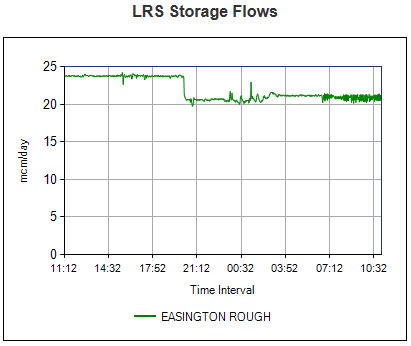
UK gas flows from Rough 5 April 2013

20mcm is about 220 GWh, so with only 108 GWh in Rough yesterday at 6am, it was clear we were going to dip below zero. The fact that we are now burning through this normally untouched 'cushion gas' reserve is a sign of the problems we have right now, and does not bode well for next winter, as everything that is pumped now ought to be put back in before the end of October to guarantee winter supplies.

According to National Grid, gas can be injected into Rough at a rate of 220 GWh/day, and the maximum capacity is 39,405 GWh. In practice, the injection rate varies according to the stock level, because the more gas is stored, the higher the pressure, so the harder it is to force more gas in. I've plotted injection/withdrawal rates vs. stock level from 2007 to date on the graph below (click for a larger version on Flickr):
UK Rough gas storage withdrawl-injection vs stock level

As you can see, the injection rate can get up to around 300 GWh/day when the store is nearly empty, but drops steadily towards 220 GWh/day as it fills, and drops quickly to 100 GWh/day when it is nearly full. Withdrawals are relatively unaffected by stock level - they are lower at the top end simply because demand is lower, and there are tentative signs of them dropping off a bit at the bottom end, presumably because of the falling pressure.

Anyway, if we assume 220 GWh/day is an average value, this implies 179 days, or about six months, to refill from empty. This year, we will be starting from below what is normally considered 'empty', so it seems unlikely that we will be able to refill the long-range stores by the end of October. Another barrier to refilling storage is planned outages, with the UK's Teeside gas terminal undergoing maintenance from tomorrow and possible reductions in Norwegian gas supplies to the UK from Monday, according to Reuters.

Combine the above with the shutdown of several GW of coal-fired power stations in 2013 and the continuing decline in North Sea gas output, and it is clear that wholesale gas prices are going to stay very high throughout 2013. This will inevitably feed through into higher gas and electricity prices for domestic and business customers, as the alternative is to let the lights go out.

The only action that can be taken in the time available is to launch a crash-programme of energy saving between now and Autumn, insulating homes, improving heating system efficiency and persuading people to wear warmer clothes and turn the thermostat down. Doing this brings a direct benefit, as your heating bills will come down, and if enough of the UK population does it, the reduced demand could help reduce wholesale prices too, as we will be able to import less gas.

Will this action be taken by more than a handful of people? Sadly, I doubt it, as nobody in a position of power is pushing for it.

Mike

Click here to read the rest of this post.

Wednesday, 3 April 2013

April brings more UK gas supply problems

In case you hadn't noticed, winter is not yet over in the UK, and today seems to have brought some new gas supply problems, though there have not been any public announcements about them yet. Below is the raw data, screen-captured from a National Grid website at 10am on 3 April 2013, with some commentary from me.

Here's the first problem - the Bacton interconnector is not flowing (again) - just like on 22nd March. You can see that hte Bacton BBL pipeline has stepped up a bit, but not enough to compensate:

Bacton gas supply graphs

On top of this, the Langeled pipeline has dropped off a bit:

Easington gas supply graphs

Also, one of our own gas field terminals, St Fergus, is showing lower flow, which can only add to the problems:

St Fergus gas supply graphs

Fortunately we have plenty of gas in the LNG stores at the moment, and extra supply is coming online as I type this...

LNG gas supply graphs

Long Range Storage (from Rough) has also started flowing again - but bear in mind that it is all but empty, so can't do this for long.

LRS gas supply graphs

The Medium Range Storage is a bit more healthy, and significant flows are coming out of these stores now:


So it looks like we're coping OK for now, but it really doesn't help the situation - in a normal year we'd be refilling gas storage by now, ready for the coming winter, but right now we're drawing the dregs out of it... Hopefully the Bacton pipeline will come back on soon - I'll keep this site updated.

Mike

UPDATE: Gas imports through the Bacton Interconnector restarted at 17:00 BST, albeit at a low level. Tomorrow's update from National Grid will show how much storage went down as a result of the lack of imports today.

Click here to read the rest of this post.

Monday, 25 March 2013

LNG to the UK's rescue this week?

Some positive news on UK gas supply from Reuters today:

The first of a trio of tanker loads of super-cooled gas from the world's largest LNG exporter docked at the Isle of Grain terminal near London on Sunday, with a second due in Wales on Monday and a third on Friday, tracking data on Reuters shows.

The Qatari tankers could supply a total of around 430 million cubic metres (mcm) of gas to Britain over the next week, compared with daily gas demand of around 370 mcm, while another tanker has set sail from Trinidad on Saturday after UK gas prices leapt on Friday when a key supply link from Belgium shut unexpectedly for 8 hours.
Lng tanker

Of course, the key is that it's only because wholesale gas prices have been so high in the past few weeks that it's arriving:
But it may take sustained high UK wholesale gas prices to lure many more gas tankers away from consistently higher paying buyers in Asia to the UK.
I expect this will enable the UK to scrape through this week's cold weather, and no doubt the government will declare that the market has 'worked'. I imagine many customers will question how well it is 'working' though when their inflated gas bills arrive later this year...

We'll need to keep prices high to keep the LNG arriving and the import pipelines flowing, as the weather is expected to stay colder than average for a few weeks yet. And there's that Norwegian shutdown looming next Monday as well...

Fundamentally we are now in an international bidding war, and we either pay up or the lights go out next winter. Of course, we could always try using less energy, but that doesn't seem to be a very high priority for the government right now...

Mike

Click here to read the rest of this post.

Friday, 22 March 2013

Problem with gas imports at Bacton Interconnector?!?!

OK, this is a bit scary - I just finished writing my previous post, and then went to the National Grid web page that shows live data about gas flow, and was alarmed to see this graph:

Gas flows at Bacton Terminal 7:20am 22 Mar 2013

What it shows is imports from the Bacton Interconnector falling from nearly 80 million cubic meters (mcm) per day down to zero. To put this in perspective, UK demand today is expected to be about 327 mcm, so that's a quarter of today's gas supply gone missing.

No new response at the time of writing from storage sites, and nothing in the news yet... Let's hope they get it back online soon, or we really may have a problem right now...

UPDATE: the mainstream media has caught up with me:
Britain's wholesale gas prices surged to a record high on Friday, after one of its three gas import pipelines shut down unexpectedly.

The operator of the UK-Belgium Interconnector pipeline said a technical problem had forced the shutdown, without giving more details.

If the pipeline remains shut for a number of days, Britain's grid operator will be forced to trigger all emergency supply options, including reducing demand from contracted users, which will cause an even higher price spike, traders said. source

Click here to read the rest of this post.

The media wakes up to the current energy shortage

Today Reuters and the BBC realised we don't have much gas left in UK storage. I've been blogging about this on and off for some years now, and in particular over the past month or so, and finally it's deemed important enough to be in the news.

Britain is grappling with a potential gas supply crisis as a late blast of winter depletes stored reserves, coal power plants close and pending maintenance in Norway threatens to further squeeze supply.

The country risks running out of stored gas by April 8 based on the fall in its reserves seen since the cold hit at the beginning of March, Reuters calculations show.

Gas storage sites have been depleted by 90 percent, with the equivalent of less than two days' consumption remaining, data from Gas Infrastructure Europe shows.

If the cold persists, as is forecast, the UK may need to cut gas supplies to some big industrial customers, as it did in 2010 at a time of severe gas shortages. source
The BBC starts with a message from SSE about the impending electricity crunch, and mentions the gas issue later on:
The boss of the energy firm SSE has warned that "there is a very real risk of the lights going out" in Britain.

Ian Marchant said the government was significantly underestimating the scale of the capacity crunch facing the country.

He was commenting on the company's decision to cut back on power generation at five sites.

The energy regulator, Ofgem, has also warned of an increased risk of a blackout.

In February it predicted power station closures could mean a 10% fall in capacity by April alone.

SSE points out that the regulator did not take into account its plans to cut power generation when the warning was issued and that therefore, makes the warning even more stark.
...
SSE is reducing its energy generation by 2,000MW over the next year. The power stations affected are Ferrybridge, Keadby, Slough, Uskmouth and Peterhead. It is also postponing further investment in gas-fired electricity generation until at least 2015. source
Just to make matters worse, the current cold snap comes just as Didcot A coal power station shuts down - it will stop generating at 2pm today,  so that's 2,000 MW of capacity which will need to be replaced by gas from this afternoon.
Aerial view from Paramotor of Didcot Power Station, Dave Price, from wikimedia

Don't forget you can keep an eye on the current gas supply situation on the National Grid website. The next few days are forecast to be very cold - more news to follow as it happens...

Click here to read the rest of this post.

Tuesday, 19 March 2013

What does the future hold for UK gas supply?

The gas crunch in the UK continues, with the current cold weather pushing demand up and very low storage continuing to be a concern. An article yesterday in the FT explains the situation very well (note, you can go via Google to avoid the paywall):

When a power cut at the Nyhamna gas processing plant in Norway hit production this month, prices in the UK soared 50 per cent in one day. The plant feeds the 1,200km Langeled pipeline that exports gas from the vast Ormen Lange field to Britain.

The loss in output was shortlived but for many in the UK it was indicative of a more worrying trend: an increasing exposure to new supply risks as North Sea production declines and competition for imports of liquefied natural gas increases.

Coming at a time when ageing coal-fired plants are being retired and new nuclear power faces delays, it raises questions over energy security, as the industry undergoes its biggest changes since privatisation in the 1980s. Alistair Buchanan, chief executive of Ofgem, the electricity regulator, warned of higher energy bills last month ahead of a “horrendous” gas supply crunch.
These are all issues I've written about recently on this blog, here and here. Just to summarise, these are the key problems that affect the UK at present or in the near future:
  • Gas production from our own fields is falling, often by around 10% a year.
  • Gas supplies from Norway (18-22% of UK winter demand) are subject to interruption, such as the storm-induced power cut mentioned above, and a technical problem in 2010.
  • Gas supplies from Europe by pipeline are subject to political problems, such as past disputes between Russia and Ukraine. They can also be affected by cold weather in Europe increasing demand there.
  • LNG imports have fallen dramatically since Fukushima, as Japan is outbidding the UK for gas.
  • Several of the UK's coal power stations will shut down for good in twelve days, with more to follow in the coming year. Some of our nuclear plants are also nearing the end of their lives.
The situation right now is that UK gas storage is at its lowest level for this time of year since 2010, and we may yet go lower than that, setting a new record. The difference is that our own gas production now is 37% lower now than it was then, comparing Q3 2012 with Q3 2010.

So while we may scrape though the tail end of this winter without any major panics on gas supply (though it's not over till the fat lady sings...), the low level of storage and limitations on supply mean that we are going to have to pay for a lot more gas imports over the coming months to refill the stores ready for next winter. So, we are virtually guaranteed to see higher domestic gas prices this year, and because about a third of our electricity is generated from burning gas, we will see prices rise there too, especially due to the shift of generation from coal to gas that will happen shortly.

If you've not already insulated and draught-proofed your home, now might be a good time to start...

Mike

Click here to read the rest of this post.

Monday, 4 March 2013

UPDATE: UK Gas Jumps to Seven-Year High as Norway Cuts Supply

Quick update to my earlier post, prices have gone even higher, and there's more info on what's going on from Bloomberg this time:

U.K. natural gas for within-day delivery jumped to the highest level since March 2006 as Norway cut supplies following a power failure at its Ormen Lange gas field in the North Sea.
...
Production from Royal Dutch Shell Plc (RDSA)’s Nyhamna gas processing plant in northern Norway, which handles fuel from Ormen Lange, is reduced by 53 million cubic meters a day today and 37 million tomorrow after storms caused a failure in the national power grid, according to Gassco AS. Output was cut by 57 million yesterday and 32 million on March 2, it said.

“The timing and extent of these offshore outages has unsettled a lot of people,” Craig Lowrey, a consultant at The Utilities Exchange Ltd. in Ipswich, England, said in a telephone interview today. “It highlights the nervousness of traders that we have seen this response.”
...
Inventories at Rough, the U.K.’s largest gas-storage facility, were at 6,909 megawatt-hours yesterday, the lowest level for the time of year since at least 2004, National Grid Plc (NG/) data show.

Start saving for your new gas bill now...

Mike

Click here to read the rest of this post.

UK gas hits five-year high as unplanned outages squeeze supply

Just when you thought that there would be no gas supply problems, as winter was over...(see my earlier post on this)

Norway's Nyhamna gas plant connected to Shell's giant Ormen Lange field in the North Sea, which primarily exports gas to Britain, had an outage on Saturday after stormy weather, with production still down by around 53 mcm/d on Monday. The capacity of the plant is 70 mcm/d.

"It's the Nyhamna outage, Ormen Lange's processing plant. With storage so low and Norway running 100 percent it's gone mental," said one British gas broker.

In addition to the Norwegian outage, flows through Britain's St. Fergus terminal were reduced by around 7 mcm/d on Monday, creating an extremely tight supply situation.

Read the full story at Reuters, and keep an eye on the situation here and here.

Mike

Click here to read the rest of this post.