Sunday, 7 April 2013

Britain's biggest gas storage runs out of normal supply

Following up on my post on Friday, here's a report from Reuters with more details:

Britain's biggest gas storage site ran dry of normal supply on Friday and is using gas usually reserved for the technical operation of the site, National Grid data showed.

Unusually cold weather in Britain has boosted gas consumption, forcing the Rough storage site off Scotland's east coast to take the unusual step of dipping into its so-called cushion or base gas.
What's very useful is that they got some figures out of Centrica on how much of this 'cushion gas' can actually be extracted:
"There is potentially an additional 1.1 TWh (terawatt hours) (100 million cubic metres) that could be produced from the Rough reservoir below this opening stock level... The opening stock published by National Grid may ultimately be at -1 TWh)," Rough operator Centrica said in a regulatory update on Friday.

They finish up by saying:
Gas traders said next week a planned strike by workers on Norway's offshore gas fields could hurt gas flows to Britain.

Supply could also be impacted by unplanned outages because of technical problems that are a regular occurrence in the vast network of gas platforms and pipelines that crisscross the North Sea.

However forecasted milder weather and two deliveries of LNG to Britain due next week could take pressure off prices, traders said.
So, we can draw a further 100mcm, or 1,100 GWh out of Rough below 'zero'. By 6am on Sat 6 April 2013 we'd already drawn 290 of these GWh of gas out of there, as shown by this screenshot taken from the Prevailing View page:


Thankfully it's warming up now, because soon this store really will be empty... The problem, and cost, of refilling it in time for next winter still remains though...

Mike

Click here to read the rest of this post.

Friday, 5 April 2013

UK long-range gas storage drained

Yesterday (4 April 2013) afternoon, the UK long-range gas storage facility at Rough went 'below empty' for the first time. This is possible because Centrica normally leaves some 'cushion gas' in the depleted Rough reservoir to make sure there’s enough pressure to keep it flowing properly. Here's the status, taken from the Prevailing View page, showing figures valid for 6am on the 3 and 4 April 2013:

UK gas storage 4 April 2013

The 4pm udpate today gives the Long Range stock level as -132 GWh, a negative stock level! I got this from the spreadhseet on this page, as the Prevailing View is being a bit slow to update today - maybe it's struggling over what to do with a negative stock level?

It was clear this was going to happen, because the Entry Zone graphs have been showing gas flowing out of Rough at over 20 mcm/day (image shows 24 hours from 4-5 April 2013):
UK gas flows from Rough 5 April 2013

20mcm is about 220 GWh, so with only 108 GWh in Rough yesterday at 6am, it was clear we were going to dip below zero. The fact that we are now burning through this normally untouched 'cushion gas' reserve is a sign of the problems we have right now, and does not bode well for next winter, as everything that is pumped now ought to be put back in before the end of October to guarantee winter supplies.

According to National Grid, gas can be injected into Rough at a rate of 220 GWh/day, and the maximum capacity is 39,405 GWh. In practice, the injection rate varies according to the stock level, because the more gas is stored, the higher the pressure, so the harder it is to force more gas in. I've plotted injection/withdrawal rates vs. stock level from 2007 to date on the graph below (click for a larger version on Flickr):
UK Rough gas storage withdrawl-injection vs stock level

As you can see, the injection rate can get up to around 300 GWh/day when the store is nearly empty, but drops steadily towards 220 GWh/day as it fills, and drops quickly to 100 GWh/day when it is nearly full. Withdrawals are relatively unaffected by stock level - they are lower at the top end simply because demand is lower, and there are tentative signs of them dropping off a bit at the bottom end, presumably because of the falling pressure.

Anyway, if we assume 220 GWh/day is an average value, this implies 179 days, or about six months, to refill from empty. This year, we will be starting from below what is normally considered 'empty', so it seems unlikely that we will be able to refill the long-range stores by the end of October. Another barrier to refilling storage is planned outages, with the UK's Teeside gas terminal undergoing maintenance from tomorrow and possible reductions in Norwegian gas supplies to the UK from Monday, according to Reuters.

Combine the above with the shutdown of several GW of coal-fired power stations in 2013 and the continuing decline in North Sea gas output, and it is clear that wholesale gas prices are going to stay very high throughout 2013. This will inevitably feed through into higher gas and electricity prices for domestic and business customers, as the alternative is to let the lights go out.

The only action that can be taken in the time available is to launch a crash-programme of energy saving between now and Autumn, insulating homes, improving heating system efficiency and persuading people to wear warmer clothes and turn the thermostat down. Doing this brings a direct benefit, as your heating bills will come down, and if enough of the UK population does it, the reduced demand could help reduce wholesale prices too, as we will be able to import less gas.

Will this action be taken by more than a handful of people? Sadly, I doubt it, as nobody in a position of power is pushing for it.

Mike

Click here to read the rest of this post.

Wednesday, 3 April 2013

April brings more UK gas supply problems

In case you hadn't noticed, winter is not yet over in the UK, and today seems to have brought some new gas supply problems, though there have not been any public announcements about them yet. Below is the raw data, screen-captured from a National Grid website at 10am on 3 April 2013, with some commentary from me.

Here's the first problem - the Bacton interconnector is not flowing (again) - just like on 22nd March. You can see that hte Bacton BBL pipeline has stepped up a bit, but not enough to compensate:

Bacton gas supply graphs

On top of this, the Langeled pipeline has dropped off a bit:

Easington gas supply graphs

Also, one of our own gas field terminals, St Fergus, is showing lower flow, which can only add to the problems:

St Fergus gas supply graphs

Fortunately we have plenty of gas in the LNG stores at the moment, and extra supply is coming online as I type this...

LNG gas supply graphs

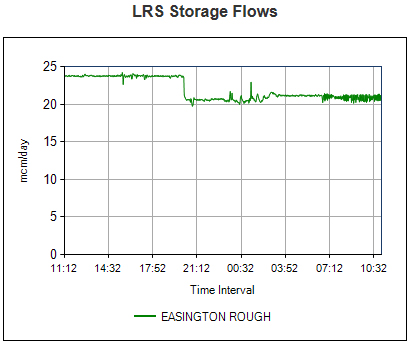
Long Range Storage (from Rough) has also started flowing again - but bear in mind that it is all but empty, so can't do this for long.

LRS gas supply graphs

The Medium Range Storage is a bit more healthy, and significant flows are coming out of these stores now:


So it looks like we're coping OK for now, but it really doesn't help the situation - in a normal year we'd be refilling gas storage by now, ready for the coming winter, but right now we're drawing the dregs out of it... Hopefully the Bacton pipeline will come back on soon - I'll keep this site updated.

Mike

UPDATE: Gas imports through the Bacton Interconnector restarted at 17:00 BST, albeit at a low level. Tomorrow's update from National Grid will show how much storage went down as a result of the lack of imports today.

Click here to read the rest of this post.

Saturday, 30 March 2013

UK Energy Trends: the decline continues

A couple of days ago the latest UK government Energy Trends publication was released by DECC. As is now normal, it does not make cheery reading...

Production

Here's the headline figures for 2012 UK energy, compared to 2011:
  • Total energy production down 10.5%
  • Oil production down 14.5%
  • Gas production down 14%
  • Coal production down 10%
  • Hydro, wind and solar generation up 21%
So, bad news on fossil fuel production, but at least renewables are growing. But note that even after this growth, renewables only supplied 11% of electricity in 2012, and a much smaller percentage of total energy, so there's still some work to do there!

There are also figures focused on the fourth quarter of 2012, comparing it to Q4 2011. The results there are even worse than for the year as a whole:
  • Total energy production down 14%
  • Oil production down 20%
  • Gas production down 21%
  • Coal production down 10%
  • Hydro, wind and solar generation up 7.5%
Gas production was much lower due in part to the leak at the Elgin platform, which is now gradually coming back into production, so hopefully the decline through 2013 won't be quite so severe. However, gas demand will be increasing, due to the closure of coal-fired power stations.

Imports

Here's the figures for how much we were importing, given for 2012 as a whole and then for Q4 2012:
  • 43% of all energy was imported through 2012, rising to 48.7% in Q4
  • About 39% of oil demand was met by imports, falling to 36% in Q4 as refinery demand reduced after the closure of Coryton refinery
  • About 47% of gas demand was met by imports, rising to 55% in Q4
  • About 70% of coal demand was met by imports, falling to 64% in Q4
Of course, the declines in oil and gas production are not just down to depletion, there have also been various technical problems and accidents, as well as maintenance. But these events are not one-offs, they happen every year as our energy infrastructure ages...

We're also a net importer of petroleum products, such as petrol, diesel and jet fuel, after the Coryton refinery shut last year - so the reduction in oil import dependency was offset by an increase in dependency on imports of the finished products.

Electricity

Looking at electricity in more detail, a few key points are worth noting:
  • Coal's share of electricity generation increased from 29.5% in 2011 to 39.3% in 2012, while gas went in the opposite direction, from 39.9% to 27.5%. This was due to price variations and upcoming carbon taxes for burning coal, combined with the remaining hours left to run on coal plants opting out of compliance with the LCPD. As many of these plants are closing during 2012 (some have already closed), the balance may be expected to swing from coal back to gas again in 2013.
  • Net imports of electricity doubled from 2011 to 2012, and represented 3.4% of total supply.
  • Installation of renewable energy capacity is still going ahead quickly, and new record generation was recorded, but it is still a relatively small proportion of overall energy.

Summary

Well, what can I say? We're producing less, importing more, but only using a little bit less energy. With the various ongoing gas supply problems I've been reporting on this blog, it is imperative that the whole of the UK takes action to reduce energy use, particularly for heating and electricity, before we get to winter 2013/14. The alternative is that we pay more. A lot more.

Oil rig: Erik Christensen


Click here to read the rest of this post.

Friday, 29 March 2013

UK gas stores running down in continued cold weather

Lots of gas was drawn out of storage in the past two days. The previous lowest storage level on record was 17 March 2010, when we had a total of 4,932GWh, split as Long Range Storage (LRS) 2959, Medium Range Storage (MRS) 1357, Short Range Storage (SRS) 616

The 4pm update on 28 March 2013 showed 3,399GWh in storage, split as LRS 1150, MRS 2200, SRS 49, so that's a new record low.

Also, by 28 March 2010, over 3,200GWh had already been reinjected to stores after the low, whereas this year it looks like we won't be putting much back in through the whole of April...

Even if we scrape through the remainder of this winter, we are not in a good position already for next winter...

Get the latest data here: http://marketinformation.natgrid.co.uk/gas/frmPrevalingView.aspx

Snow blizzard

Click here to read the rest of this post.

Monday, 25 March 2013

LNG to the UK's rescue this week?

Some positive news on UK gas supply from Reuters today:

The first of a trio of tanker loads of super-cooled gas from the world's largest LNG exporter docked at the Isle of Grain terminal near London on Sunday, with a second due in Wales on Monday and a third on Friday, tracking data on Reuters shows.

The Qatari tankers could supply a total of around 430 million cubic metres (mcm) of gas to Britain over the next week, compared with daily gas demand of around 370 mcm, while another tanker has set sail from Trinidad on Saturday after UK gas prices leapt on Friday when a key supply link from Belgium shut unexpectedly for 8 hours.
Lng tanker

Of course, the key is that it's only because wholesale gas prices have been so high in the past few weeks that it's arriving:
But it may take sustained high UK wholesale gas prices to lure many more gas tankers away from consistently higher paying buyers in Asia to the UK.
I expect this will enable the UK to scrape through this week's cold weather, and no doubt the government will declare that the market has 'worked'. I imagine many customers will question how well it is 'working' though when their inflated gas bills arrive later this year...

We'll need to keep prices high to keep the LNG arriving and the import pipelines flowing, as the weather is expected to stay colder than average for a few weeks yet. And there's that Norwegian shutdown looming next Monday as well...

Fundamentally we are now in an international bidding war, and we either pay up or the lights go out next winter. Of course, we could always try using less energy, but that doesn't seem to be a very high priority for the government right now...

Mike

Click here to read the rest of this post.
Friday, 22 March 2013

Bacton gas outage - how well did we cope, and what next?

Earlier today I wrote about an outage at the Bacton Interconnector, which imports gas from Belgium to the UK. The outage was caused by the failure of a simple pump, but couldn't have come at a worse time, given the low amount of gas in UK storage and the ongoing cold weather. So how did the UK and National Grid cope with the outage, and what are the consequences? The following graphs were all screen captured from National Grid's Instantaneous Flows Report in 24-hour view at about 7:30pm on Fri 22 March 2013.

This first one shows the problem - the blue line represents gas entering the UK via the Bacton Interconnector. From about 7am to 2pm there was little or no gas coming through, compared to the rest of the day when the flow was about 70mcm/day. So that's about 20mcm that had to be found from other places to meet today's UK gas demand (which is high, due to the cold weather). Demand today was around 350mcm, so this was just under 6% of the day's demand that went missing.

National Grid UK gas graphs Fri 22 Mar 2013

Well, clearly the lights didn't go our (remember that about a third of our electricity is generated by burning gas), so what happened? Well, the first thing was that gas started flowing out of Long Range Storage, which is actually an old gas field called Rough. There was no gas coming out of this prior to the Bacton outage, but about an hour after it, flows started and ramped up close to maximum for the duration of the outage, and stayed a bit above half maximum afterwards. To put this in context, if gas was drawn from LRS at maximum rate continuously, we only have enough in it right now to keep going for about 5 days.

National Grid UK gas graphs Fri 22 Mar 2013

A little bit later on, extra gas started flowing from one of the Liquefied Natural Gas (LNG) terminals. This is gas that arrives on tankers from Qatar and other places, is pumped into storage vessels and released gradually as required. However, we've not been able to import much LNG in the past year, as Japan is buying a lot of the global supply, to replace the output of the nuclear power stations that were shut down after Fukushima. There's about 65% more gas in the LNG stores than there is in LRS right now. At the time of writing the flows coming out of LNG were about 18mcm/day, at which rate the stocks would last about 21 days - but with more cold weather coming, the withdrawal rate could increase.

National Grid UK gas graphs Fri 22 Mar 2013

As the outage continued, gas also started flowing from the Medium Range Stores. There's currently about the same amount of gas in MRS as in LRS, but it can be released faster when required - though clearly that would only then give us a few days' supply.

National Grid UK gas graphs Fri 22 Mar 2013


This final graph was from one of the links on National Grid's Prevailing View page. The black line indicates actual flows, and the orange line indicates the estimate for the day's gas demand at that point in the day. The effect of the Bacton outage is clear, as is the increased supply post-outage to compensate for what went missing.

National Grid UK gas graphs Fri 22 Mar 2013
So the good news is that the 'market' worked, and enough gas arrived despite the outage. The bad news is that the extra supply came out of storage and LNG, reducing stocks. This is a problem because the coming week is forecast to be unseasonably cold for March - check out the 'feels like' temperature map at the Met Office. Add to this the fact that one large coal power station shut for good today (Didcot A, 2,000 MW), and others are to follow - so that means more gas being burned to generate electricity.

So, we have a tight week ahead for gas and electricity supply in the UK, with the cold weather. What about after that? I'm sure we're all hoping Spring will arrive eventually, and be followed by a decent summer. But even if everywhere is lovely and warm, there's still a job to be done - refilling the gas storage and getting the LNG stores back up to a decent level. This will be expensive work - we need to import a lot of gas to do this, and ultimately it's you and I who are going to pay for it, one way or another. But it's not even that simple sadly... Norway needs to take about 40 mcm/day of production offline from 1 April to 2 August to carry out maintenance. This is bound to reduce availability to some extent in the European gas market, so can only push prices higher, and perhaps even limit what it is possible for us to put back into the gas stores before next winter.

Let's hope the summer is a warm one...

Click here to read the rest of this post.